Bear intelligence
you can trust.

It all started with 11 kids & an empty playground.
At Yobetsu Elementary School in Shakotan, signs of a bear could mean weeks without walking to school or playing outside. The problem wasn’t simply that bears might be nearby. It was that nobody knew.
Was the bear still there? Had it moved on? Had there really been a bear there in the first place?
UrsiQ began as a solution to that uncertainty: a way to give communities better evidence for decisions that protect people without imposing unnecessary restrictions on everyday life.

Pronounced “ur-seek”
Bear intelligence. Connected.
Urs comes from ursus, Latin for bear. iQ stands for intelligence. Together, UrsiQ brings careful observation and clear, timely information to bear detection and alerts.
There’s another idea in the sound of the name: “seek”—to search for. UrsiQ keeps looking for the fleeting signs that might otherwise go unnoticed. The final Q also suggests a “cue”: a signal to pay attention, or a marker that takes you to a particular moment in a video. That matters because a wildlife encounter is more than a single frame. What happens before and after—the movement, the changing angle, the brief appearance behind the leaves—can turn an uncertain glimpse into a clearer understanding. Seek the moment. Read it in context. Know when it calls for action.
There’s a happy coincidence, too. In Inuktitut—an Inuit language spoken in the Arctic, including Nunavik in far northern Québec—ursiq is the ring that connects a dog’s harness to a sled. For us, it’s a fitting image: many points of effort, connected to work together. Our cameras and sensors gather evidence in the field; UrsiQ Core brings it together, analyzes it and turns it into useful alerts.
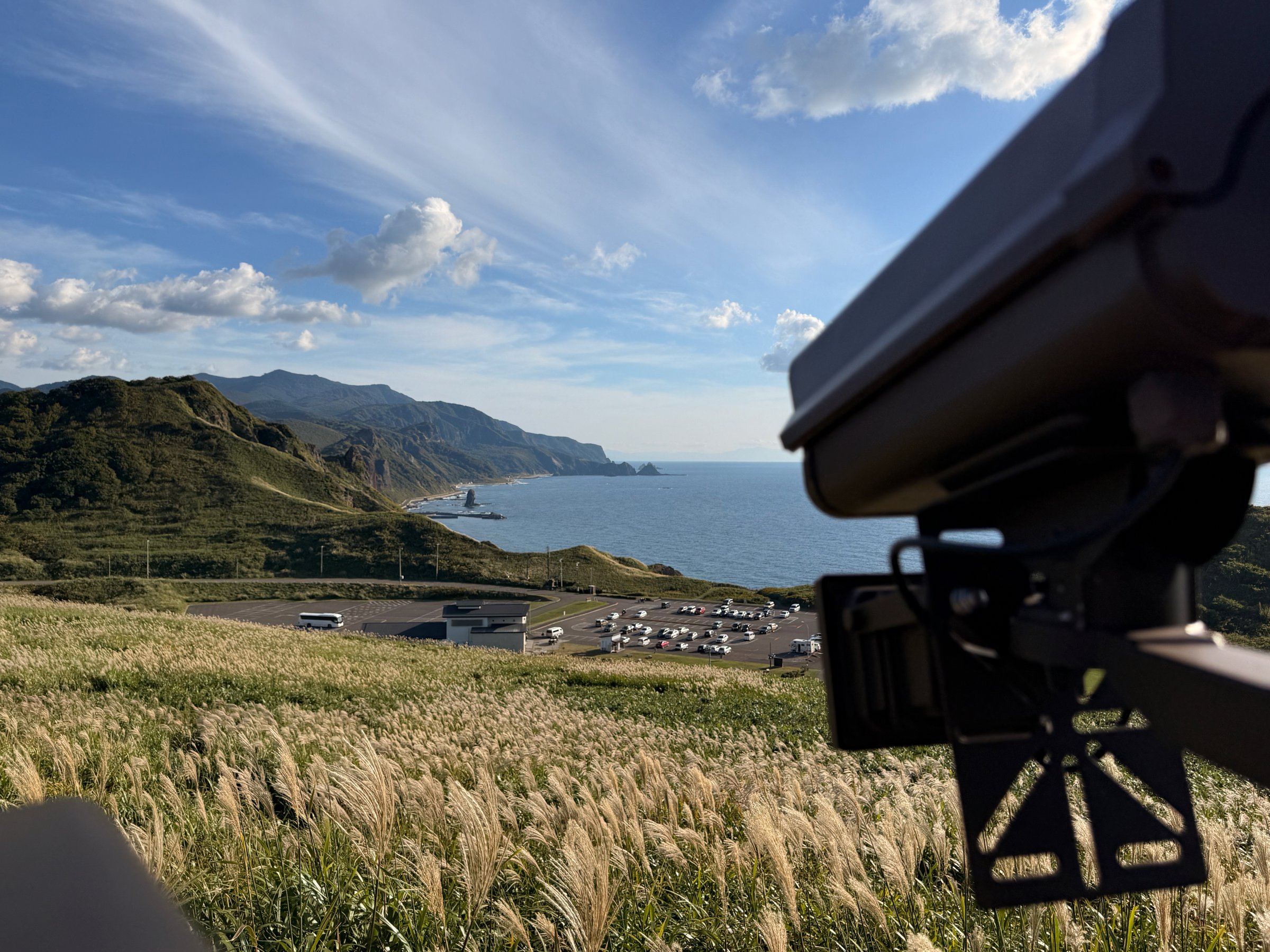
Learn about the Inuktitut word at URSIQ →Real wildlife. Real conditions. These images from Shakotan show UrsiQ doing what it was built to do: reveal what’s happening in the field.
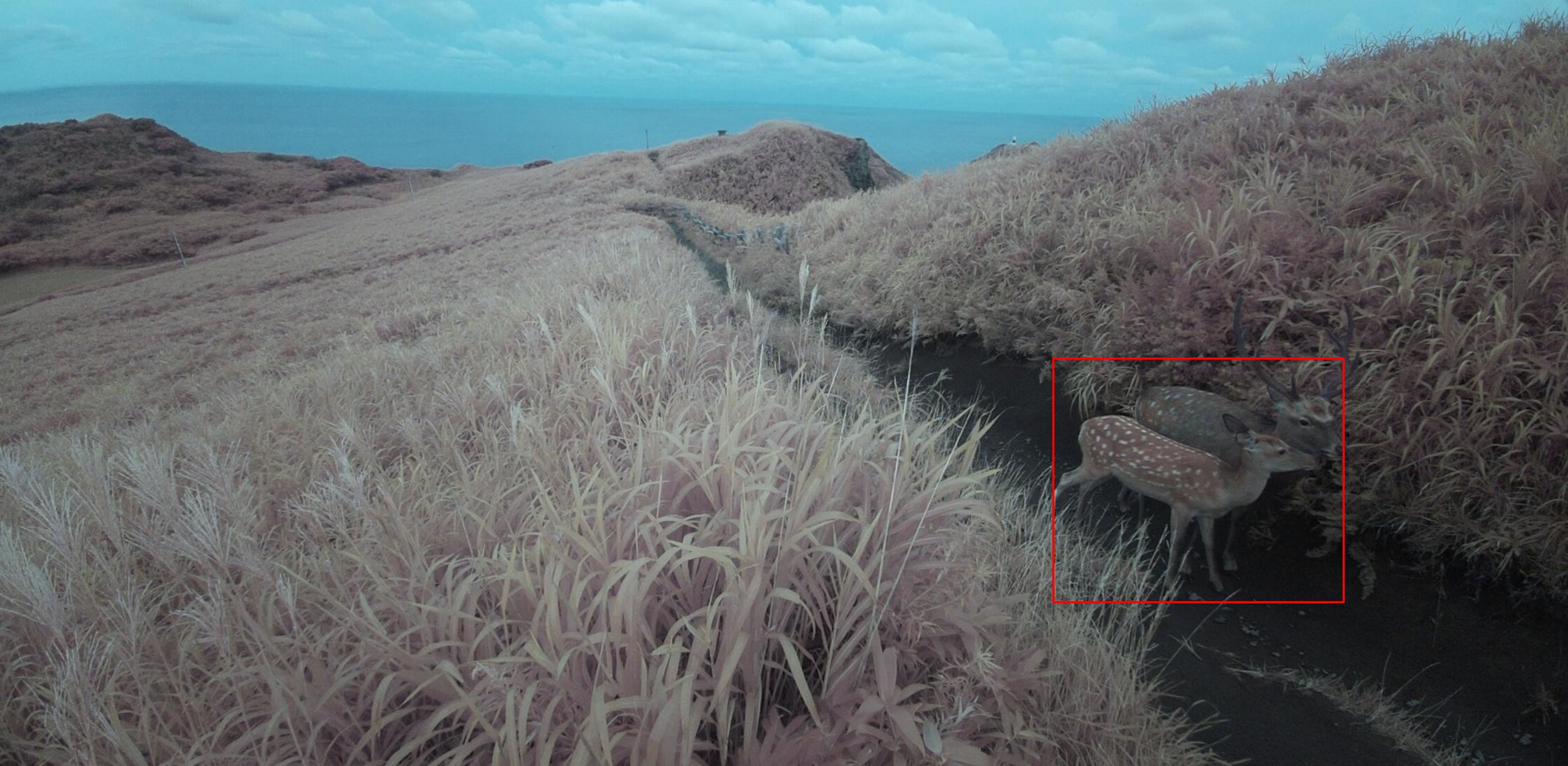
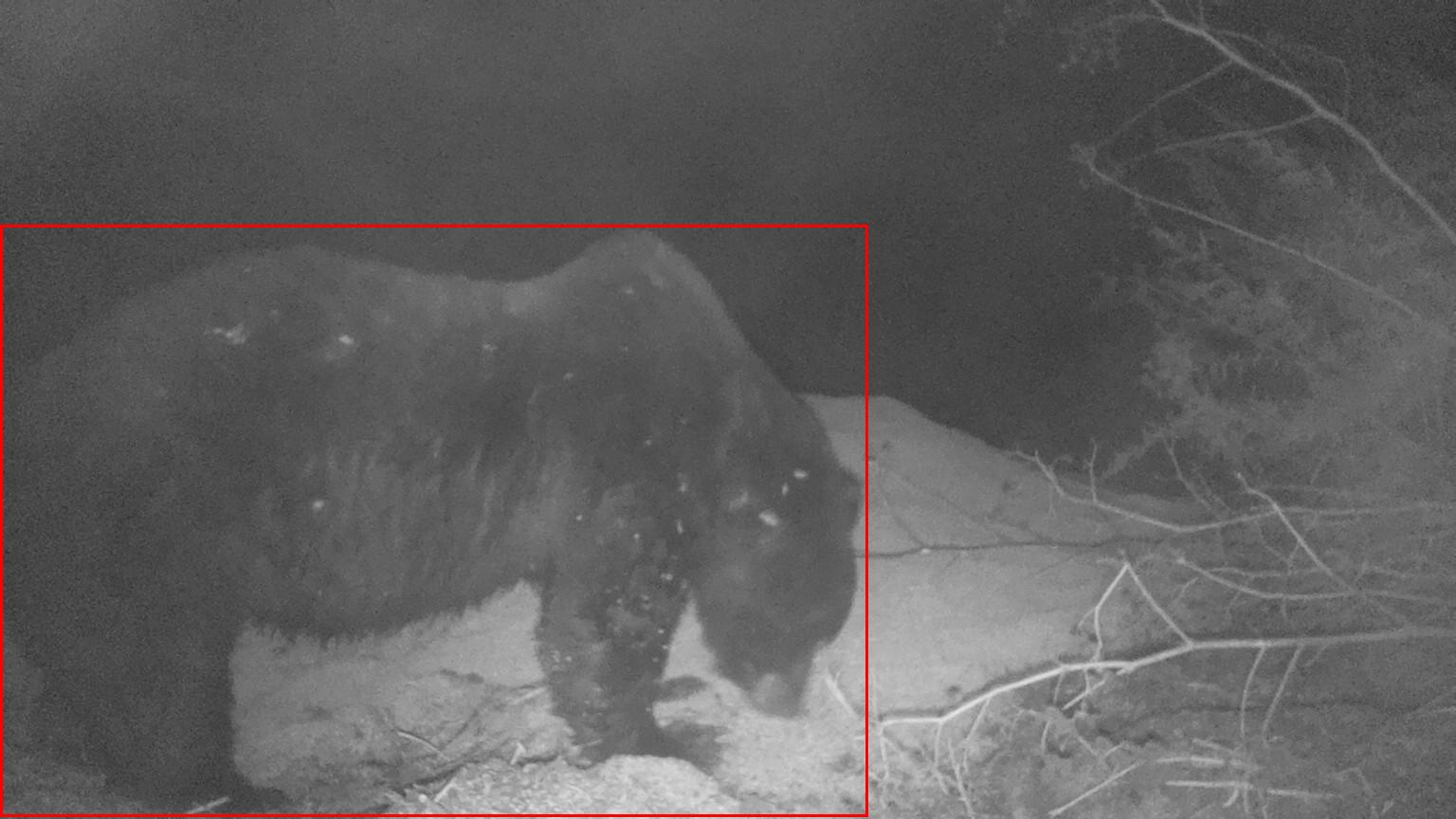
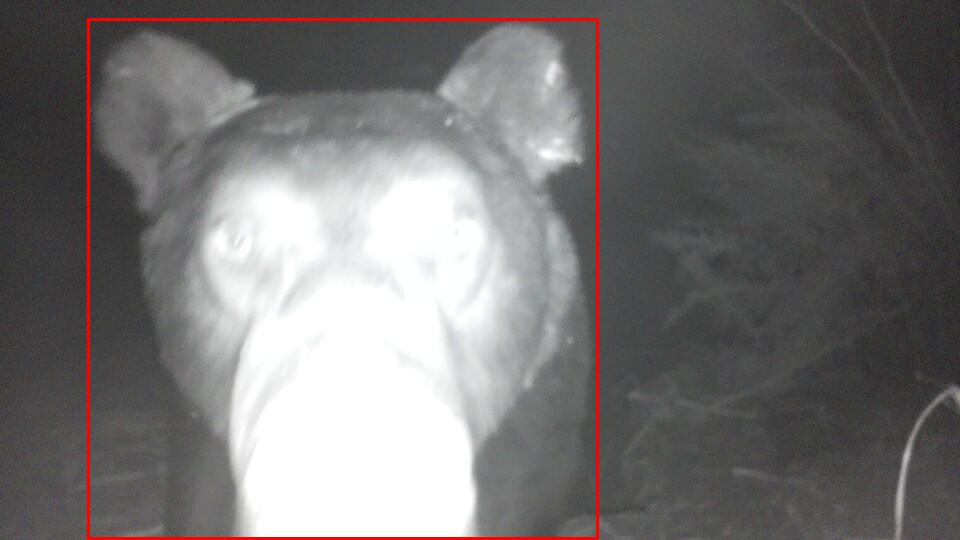
False animal reports: 0.
Species misidentifications: 0.
Final animal reports are manually reviewed for animal presence and correct species identification. Cumulative count of images captured and analyzed by Mark III through 16 September 2026 (Japan time).
Strength in numbers.
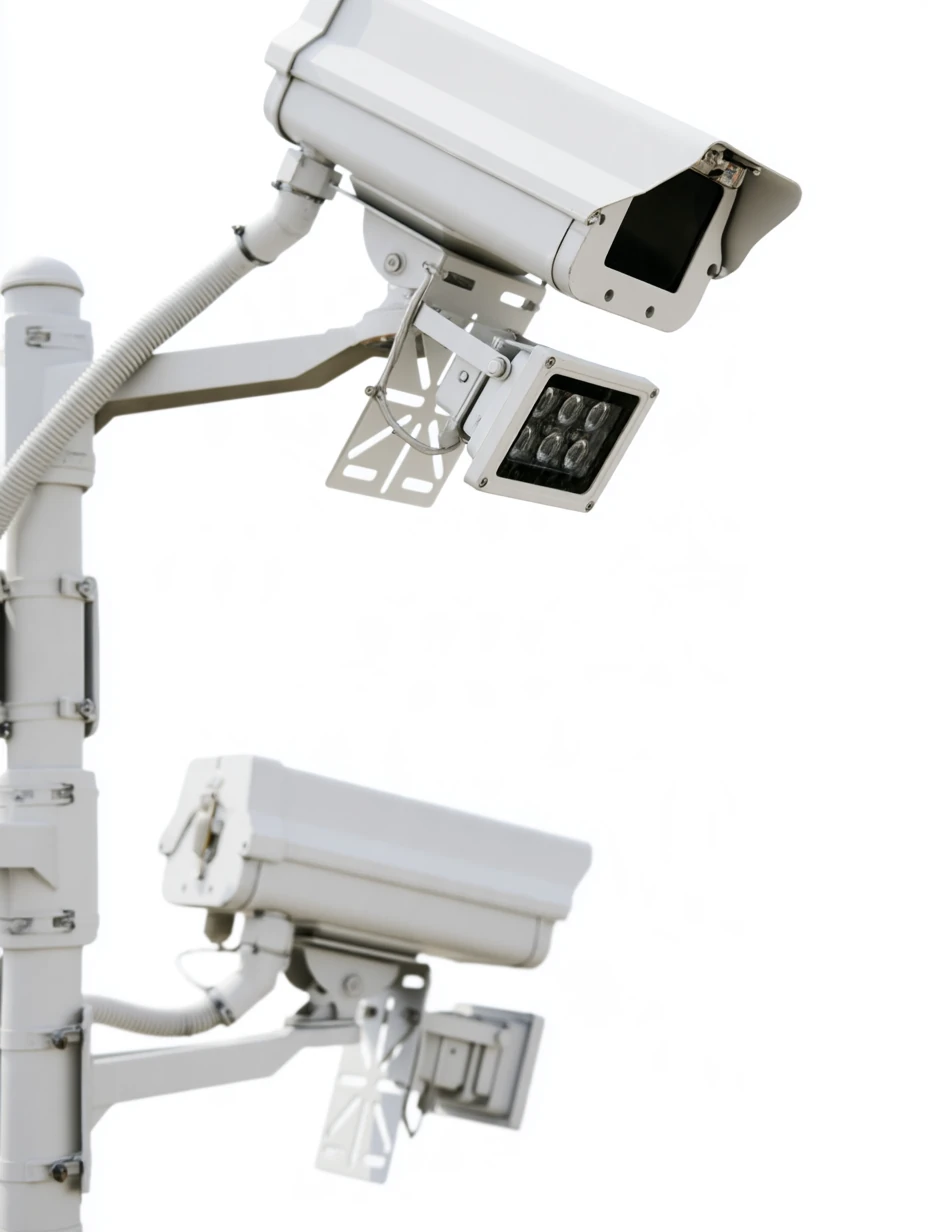
UrsiQ doesn’t rely on a single viewpoint. Multiple cameras work together at each monitoring site, combining still imagery and video to build a persistent picture of activity in the field.
Those sites, in turn, become part of a larger network. UrsiQ Core—our central server and software platform—brings observations from across the system together for processing, creating a constellation of evidence rather than a collection of isolated camera feeds.
Despite appearances, the cameras themselves are no standard security cameras bolted onto a bear system. They are purpose-built for wildlife monitoring, with operation optimized for each site, day and night.
With suitable placement, UrsiQ can detect objects about the size of a small car at roughly 200 m, and person-sized objects readily at around 50 m.
200,000images captured, processed and analyzed every day across the three UrsiQ installations in Shakotan.
At that rate, UrsiQ examines more than 70 million field images a year—an observational net designed to support public safety and help keep tourism destinations open on as many days of the season as conditions allow.
Connect the dots.
UrsiQ brings observations from multiple cameras and sensors into a clearer picture of the field. Careful assessment helps distinguish meaningful wildlife activity from misleading glimpses, so customers receive useful information with fewer distractions.
Mark III, the third version of the UrsiQ system, assesses still images and video together. A still preserves detail; video reveals movement, behavior, changing angles and features visible only as an animal moves. Combining both produces stronger evidence and helps resolve ambiguous sightings.
Every significant observation keeps its supporting evidence: what was seen, when and where, and whether a notification was sent. Customers can return to the original images and video to review an encounter and understand the information behind an alert.
Spring into action.
When an observation requires attention, UrsiQ turns evidence into an information stream designed for action. UrsiQ handles assessment and notification, so customers can focus on the information they need and the decisions ahead.
Notification policies and delivery methods can be customized for each customer. In a typical deployment, a verified bear alert can arrive by LINE within just a few seconds of detection. UrsiQ is engineered to communicate when necessary and maintain silence when it is not: it means what it says and says what it means.
More importantly, UrsiQ is designed to provide actionable intelligence for evidence-based decision-making—to give local officials a factual basis for public-safety decisions, grounded in what is actually happening in the field.
Complex for us.
Simple for you.
UrsiQ Mark III coordinates cameras, field equipment, still images, video, analysis, verification, alerts, equipment records and service history. Customers don’t need to understand that complexity—and they shouldn’t have to.
Dependable information. Attentive support.
Behind the scenes, UrsiQ Core helps us keep installations working well, review wildlife observations and respond to changing field conditions. Our team can follow each site’s health and history, refine its performance and provide informed support without passing that complexity on to the customer.
That operational and analytical depth is what lets UrsiQ continuously turn a distributed field system into dependable evidence.
Forget the complexity and focus on the wildlife.
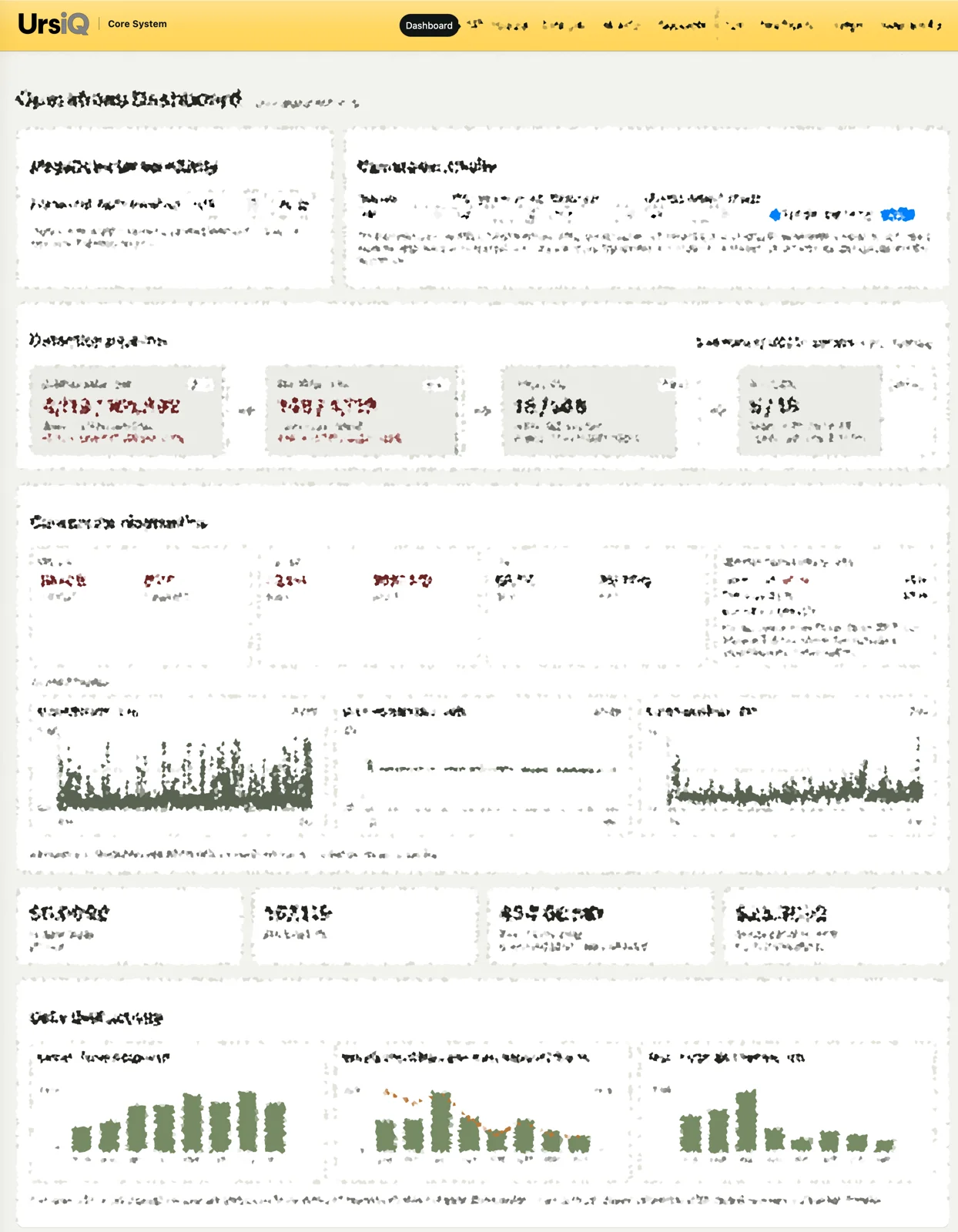
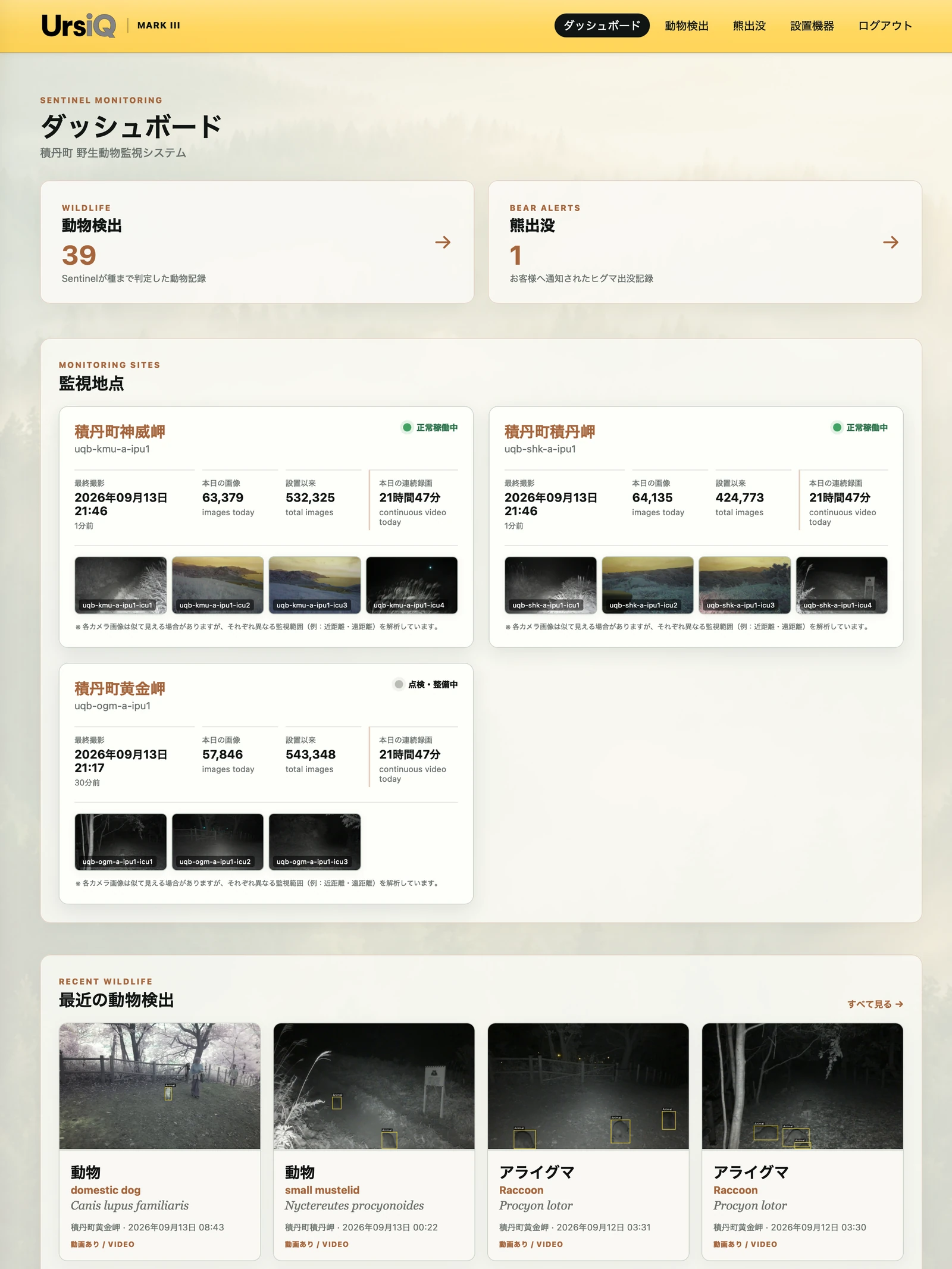
A single view of monitoring sites, wildlife observations, bear alerts and system status. Current snapshots from each camera make field conditions immediately visible, while simple cards present confirmed wildlife sightings without exposing the machinery that produced them.
Walking distance from the field.
Driving distance from our customers.
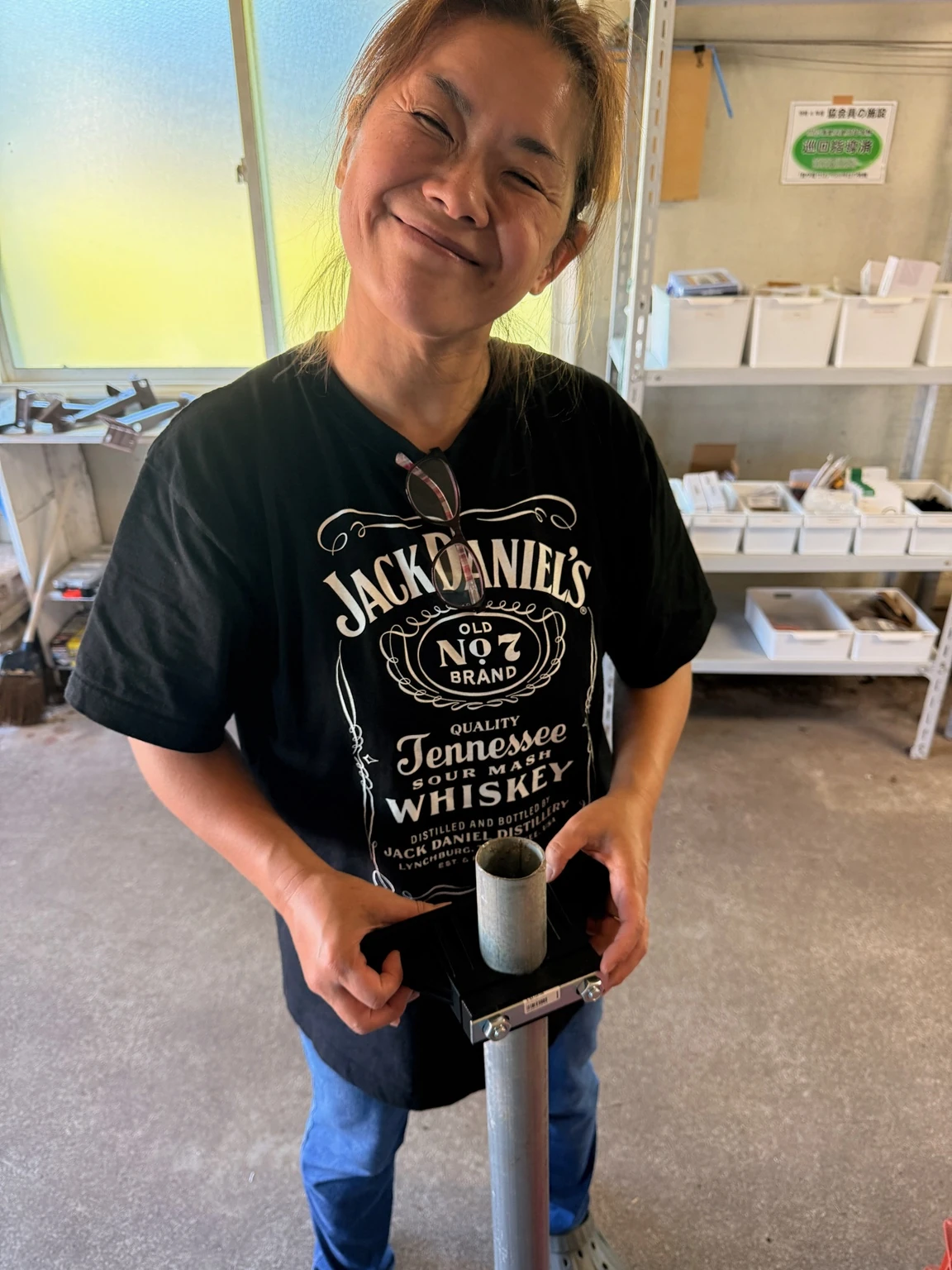
UrsiQ is not an off-the-shelf system assembled from somebody else’s ideas. At Verbium, we design and develop the hardware and software ourselves. We fabricate and paint parts, assemble and test systems, install them in the field, and service them ourselves.
That matters because improvement never has to travel through layers of suppliers or departments. If we discover that something can be done better, we can go out and change it. From power consumption to detection algorithms, a customer can call Verbium and speak directly with someone who understands that part of the system.
Built in Hokkaido. Informed by Alaska.
Our perspective also comes from having experienced life in rural Alaska, north of the 64th parallel and just south of the Arctic Circle—where grizzly bears are part of daily life.
We continue to operate an affiliate in Alaska. Alongside that connection, our ability to incorporate leading-edge image-processing and AI technology from the United States brings a broader perspective to the systems we design, build and support here in Hokkaido.
Most of all, quality and customer service are not simply means to an end for us. They are goals in themselves—things we continually pursue. The result is a level of service as distinctive, responsive and customer-focused as UrsiQ itself.
From uncertainty
to evidence.
Knowing what’s actually happening on the ground means better decisions—and a better chance for people and wildlife to coexist in peace. For bears to have the space to be bears. For kids to have the space to be kids.
And that’s just fine with the students at Yobetsu Elementary.
Want the details?
Explore UrsiQ’s features, components and pricing—from the intelligence inside each camera to complete field configurations and ongoing service.
Learn more about Verbium →